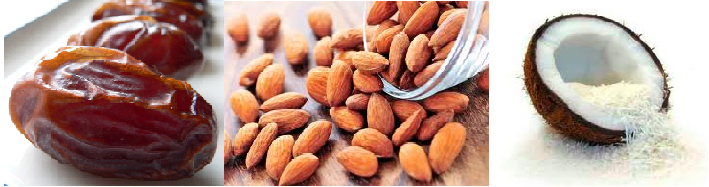
Hey all! We’ve been experimenting in the kitchen and can’t wait to share this recipe with you; many people are at all loss when it comes to travel-friendly Paleo snacks. To help, we’ve crafted our very own Coconut Pie Fruit and Nut Bar! All the ingredients are whole, fresh and Paleo-friendly, and they’re very inexpensive to make. Plus, no cooking required.
One batch makes 8 servings, and will roughly contain 220 calories, 31g of carbohydrates, 10 grams of fat and 4 grams of protein. These bars make a great post-work out snack or can certainly serve as one part of a larger, protein-rich Paleo meal.
Coconut Pie Fruit and Nut Bars
8 servings
Ingredients:
1 cup unsweetened coconut flakes
.5 cup raw almonds
.5 cup roasted, unsalted cashews* (or pecans, almonds or macadamia nuts)
1.5 cups of pitted dates (loosely packed)
1 tablespoon coconut oil
1 teaspoon vanilla
¾ teaspoon of salt
Grind the almonds and cashews (or other nut of choice) in a food processor until they are in gravel-sized pieces. Don’t make nut flour here – we want to preserve the crunch! Remove the ground nuts and put them aside in a bowl.
Grind the coconut flakes to a similar consistency (if your coconut is already shredded or desiccated, you can skip this step). Place the coconut in the bowl with the nuts.
Place the pitted dates in the food processor with the coconut oil, vanilla and sea salt. Grind until thoroughly combined and the skin of the dates is chopped so they make one ball/mixture rather than individual dates.
Add the nut/coconut mixture to the food processor. Pulse until combined.
Press the date+nut mixture into a small, parchment lined tray/pan and place in the freezer for 15 minutes.
Remove from freezer, slice and enjoy! Wrap the bars in tin foil or parchment paper for easy travel.
*Note: We understand that some consider cashews a legume, and thus believe it shouldn’t be included on a Paleo diet. That’s fine with us! The cashews in this recipe can easily be subbed out for almonds, pecans or macadamia nuts with identically delicious results!
Be sure to tell us what you think in the comments section or onFacebook and Twitter!
While the occasional dark-chocolate indulgence isn’t at odds with staying on track with a paleo diet, might we suggest some savory options for eating hearts?
Have you ever caught yourself wondering about one of these questions:
Is it really possible to get all the essential nutrients your body requires on a Paleo diet?
Which foods are the healthiest, the most nutrient rich?
How do grains and legumes stack up next to meats and vegetables in terms of nutrient density?
Well, we have!We love learning about this stuff, and are so excited to be able to share this video with you! Below is a video from this past summer’s Ancestral Health Symposium at Harvard University (it was basically a convention of doctors, scientists and other really smart people who came together to discuss health, diet and Paleo).
Mathieu Lalonde, the speaker, is a Harvard-educated organic chemist with a genuine interest in human metabolism, nutritional biochemistry, health and athletic performance. He’s also the nutrition expert over at OPT - and a killer athlete, to boot! This video is his presentation of a new model of nutrient density that eliminates established biases and compare the nutrient density of meat, vegetables, fruits, nuts and seeds to that of grains and legumes. In other words, he’s trying to figure out which foods are the most nutrient dense, and do so in a manner with as little bias as possible.
The main conclusions he draws are:
1. The available data suggest that a diet centered around meat, vegetables, fruits , nuts and seeds is very nutrient dense and can easily provide all essential nutrients in adequate quantities.
2.The notion that grains and legumes are nutrient dense likely originates from a lack of segregation between raw grains and legumes, which are inedible, and cooked grains and legumes.
We were already proud to have gotten some great press from online magazines Well+GoodNYC and DNAinfo.com, but we’re even PROUDER to see Kettlebell Kitchen’s name in print in New York magazine!.
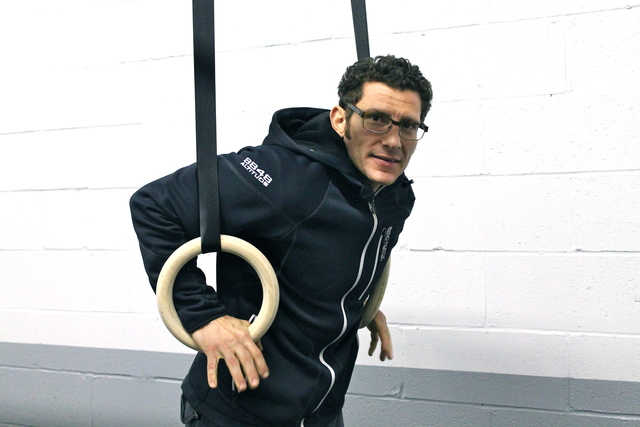
One of the very first CrossFit gyms to get on board with Kettlebell Kitchen is the brand-new CrossFit Gantry, owned by Jay Hachadoorian.
Thanks to Jay (pictured below) for being sure to name-drop Kettlebell Kitchen when he got this great blurb:
In addition to hour-long WODs (that’s “Workouts of the Day” for the CrossFit uninitiated), [CrossFit Gantry] offers regular power-lifting classes, plus physical-therapy sessions, sports massages, and Paleo meals from Kettlebell Kitchen specifically designed for CrossFitters [emphasis added]. Membership starts at $125 a month. 10-20 47th Rd., nr. Vermont Blvd., Long Island City; 347-848-0956.